
-
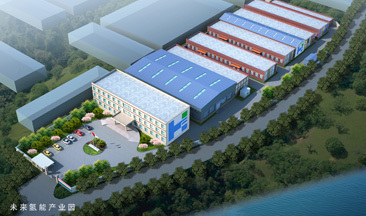
About UsFuture Hydrogen Energy Technology is a national high-tech company with global hydrogen energy technology and equipment. It has a number of core patented technologies. The international expert team has more than 30 years of hydrogen energy research and development and technology accumulation.
-
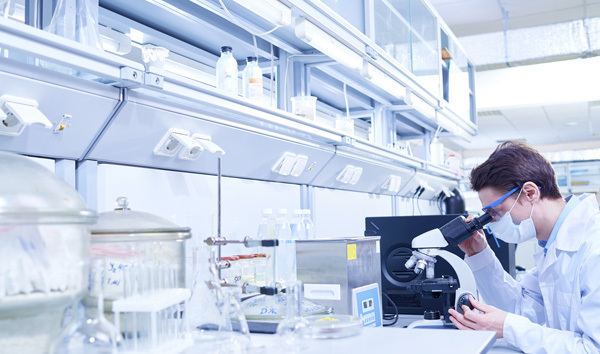
SolutionFuture Hydrogen Energy Technology is a national high-tech company with global hydrogen energy technology and equipment. It has a number of core patented technologies. The international expert team has more than 30 years of hydrogen energy research and development and technology accumulation.
-
-
Robust and reliable, quality assurance
-
AEM Electrolyzer
-
AEM hydrogen production system
AEM hydrogen production system
Products
-
-
ServiceFuture Hydrogen Energy Technology is a national high-tech company with global hydrogen energy technology and equipment. It has a number of core patented technologies. The international expert team has more than 30 years of hydrogen energy research and development and technology accumulation.

-
BlogFuture Hydrogen Energy Technology is a national high-tech company with global hydrogen energy technology and equipment. It has a number of core patented technologies. The international expert team has more than 30 years of hydrogen energy research and development and technology accumulation.

Official Announcement: China’s Green Hydrogen Capacity Exceeds 250,000 Tons! Key Statement from the National Energy Administration: What’s Next for the Second Half of Hydrogen Energy Development?
2026-02-25
未来氢能
Foreword
As 2026 begins, the hydrogen energy industry has once again entered a "highlight moment." According to the latest data from the National Energy Administration (NEA), China’s installed capacity of hydrogen produced from renewable energy (green hydrogen) has officially exceeded 250,000 tons. From policy prioritization to capacity realization, green hydrogen is breaking out of laboratories and demonstration zones with unstoppable momentum, heading toward a trillion-yuan market.
I. Core Milestone: The "Speed and Momentum" Behind 250,000 Tons
At the NEA’s first-quarter 2026 press conference, official data laid out the hydrogen energy industry’s current landscape:
- Scale Leap: As of now, China’s installed green hydrogen production capacity exceeds 250,000 tons per year.
- Investment Surge: In 2025, total investment in key hydrogen energy projects doubled, making it one of the most active investment sectors in the energy transition.
- Technological Breakthroughs: The localization rate of core equipment continues to rise. From aerospace-exclusive supply to large-scale industrial applications, the entire technical chain has been fully validated.
Interpretation: The 250,000-ton figure is not just a number—it marks the completion of China’s green hydrogen "0-to-1" startup phase and the official entry into the "1-to-10" stage of large-scale expansion.
II. Policy Guidance: Standards Established, the Trinity of "Green Hydrogen, Green Ammonia, Green Methanol"
Notably, the NEA has clarified product standards for green hydrogen, green ammonia, and green methanol. This sends a critical signal: hydrogen energy is no longer an isolated energy source but the "base fluid" for industrial green transformation.
- Ending Unregulated Growth: With past debates over "what constitutes green hydrogen" resolved, the establishment of standards provides a clear basis for subsidies, trading, and carbon emission reduction accounting.
- Extending the Industrial Chain: The NEA emphasizes hydrogen-ammonia-methanol integration, aiming to convert hydrogen into easier-to-store-and-transport ammonia and methanol to solve hydrogen’s transportation bottlenecks and align with global green trade.
III. Deep Outlook: Three Major Transformations for the Hydrogen Energy Industry in 2026
Against the backdrop of General Secretary Xi Jinping’s recent directive to "cultivate new growth points in hydrogen energy and green fuels" and the start of the 15th Five-Year Plan period, the hydrogen energy industry faces three pivotal shifts:
1. Role Shift: From "Supporting Energy" to "Decarbonization Leader"
Previously, hydrogen was mostly an auxiliary tool for absorbing surplus wind and solar power. Now, it is becoming the only viable solution for achieving zero-carbon transformation in high-energy-consuming sectors such as steel and chemicals. The 250,000-ton capacity is merely a drop in the bucket compared to the massive demand in these industries—future shortages represent enormous business opportunities.
2. Status Shift: From "Local Pilots" to "National Strategic Fund" Support
The planned establishment of a national low-carbon transition fund will inject long-term capital into the capital-intensive hydrogen sector. During the 15th Five-Year Plan period, funding is expected to concentrate on zero-carbon industrial parks with scale effects and cross-border hydrogen trade hubs.
3. Logic Shift: From "Competing on Equipment" to "Competing on Standards and Applications"
Starting in 2026, the era of simply selling electrolyzers will end. Future winners will be system integrators that provide full-chain solutions: "green electricity + green hydrogen + green fuels."
IV. Conclusion: The Wind Is Here—Are You Ready?
The achievement of 250,000 tons of capacity signals that China’s hydrogen energy industry has completed the "foundation" phase of infrastructure development. In the upcoming economic cycle, green hydrogen will reshape China’s energy landscape—much like photovoltaic did a decade ago and lithium-ion batteries did five years ago.
(Source: Guoke Green Hydrogen)
Related information

Domestic & Global Industry Updates | Weekly Hydrogen Energy News Review
Hydrogen Energy News Roundup
2026-09-14

It is learned that on August 17, the National Development and Reform Commission (NDRC) and the National Energy Administration (NEA) released the 15th Five-Year Plan for Petroleum and Natural Gas Development (hereinafter referred to as "the Plan").
2026-08-25

The National Energy Administration recently released the China Hydrogen Energy Development Report (2026). According to the report, during the 14th Five-Year Plan period, the global hydrogen energy industry is at a critical window of transition from pilot exploration to orderly breakthrough. In 2025, global hydrogen production and consumption reached approximately 109 million tonnes, up about 3% year on year. Renewable hydrogen production is entering a stage of large-scale development, with China and Europe together accounting for over 70% of the world's renewable hydrogen production capacity.
2026-08-25


