
-
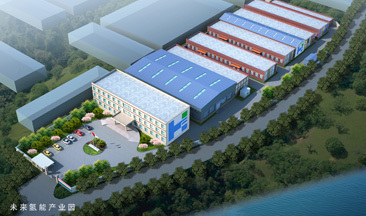
About UsFuture Hydrogen Energy Technology is a national high-tech company with global hydrogen energy technology and equipment. It has a number of core patented technologies. The international expert team has more than 30 years of hydrogen energy research and development and technology accumulation.
-
SolutionFuture Hydrogen Energy Technology is a national high-tech company with global hydrogen energy technology and equipment. It has a number of core patented technologies. The international expert team has more than 30 years of hydrogen energy research and development and technology accumulation.
-
-
Robust and reliable, quality assurance
-
AEM Electrolyzer
-
AEM hydrogen production system
AEM hydrogen production system
Products
-
-
ServiceFuture Hydrogen Energy Technology is a national high-tech company with global hydrogen energy technology and equipment. It has a number of core patented technologies. The international expert team has more than 30 years of hydrogen energy research and development and technology accumulation.
-
BlogFuture Hydrogen Energy Technology is a national high-tech company with global hydrogen energy technology and equipment. It has a number of core patented technologies. The international expert team has more than 30 years of hydrogen energy research and development and technology accumulation.

Domestic & Global Industry Updates | Weekly Hydrogen Energy News Review
2026-09-14
Policies & Announcements
01. Nine government authorities including MIIT promote coordinated development of new energy vehicles, green power and green hydrogen
On September 11, the Ministry of Industry and Information Technology (MIIT), together with the National Development and Reform Commission, Ministry of Public Security, Ministry of Transport, Ministry of Commerce, Ministry of Natural Resources, Ministry of Housing and Urban-Rural Development, State Administration for Market Regulation and the Cyberspace Administration of China, jointly issued the 15th Five-Year Plan for the Development of Intelligent Connected New Energy Vehicle Industry (MIIT Joint Regulation Letter〔2026〕No.305). The plan states that by 2030, China will further consolidate its full industrial chain advantages in intelligent connected new energy vehicles and become a world automotive power. New energy passenger vehicles and commercial vehicles will account for 70% and 40% of respective new vehicle sales, and automobiles with autonomous driving functions will achieve large-scale application.
In terms of hydrogen energy, the plan specifies the development of high-temperature-resistant, high-power and long-life fuel cell stacks and engines under the key technology research project. For the task of strengthening integrated development of automobiles and energy, it proposes to advance coordinated development of new energy vehicles, green power and green hydrogen. It also supports wider application of new energy heavy-duty trucks in scenarios including trunk logistics and short-haul transportation at specific sites, speeds up the improvement of charging and battery swapping infrastructure, and promotes large-scale vehicle-to-grid interaction.
Centered on five priorities — enhancing technological innovation capacity, optimizing and upgrading the industrial system, advancing cross-border integrated development, building a scientific and efficient industry governance system, and fostering a new landscape of global industrial cooperation — the plan deploys 17 key tasks, alongside four major projects and three key initiatives. It targets carbon peaking in the automotive industry before 2030 and accelerates the green and low-carbon transition of the supply chain.
02. MIIT opens public consultation on mandatory national standard for fuel cell electric vehicle safety
On September 9, the Equipment Industry First Department of MIIT launched public consultation on the mandatory national standard Safety Requirements for Fuel Cell Electric Vehicles. The consultation period closes on November 8. With plan number 20256776-Q-339, this standard is intended to replace the current recommended national standard GB/T 24549—2020. It applies to Class M and Class N fuel cell electric vehicles fueled by compressed gaseous hydrogen with a nominal working pressure not exceeding 70 MPa.
The draft for consultation adds requirements on hydrogen emission under thermal conditions in cyclic operating modes: the average hydrogen volume concentration within any continuous 3 seconds shall not exceed 4.0%, instantaneous concentration shall not exceed 8.0%, and vehicle hydrogen emission rate shall not exceed 8.0%. Alarms shall be triggered when hydrogen volume concentration reaches 2.0%±1.0% in enclosed or semi-enclosed spaces, and hydrogen supply shall be automatically cut off immediately once concentration hits 3.0%±1.0%. Vehicles fitted with 70 MPa hydrogen storage cylinders shall support hydrogen refueling communication functions. New post-crash safety requirements are also included. According to the compilation notes, the standard is proposed to take effect on January 1, 2028.
03. Beijing: Up to RMB 100 million investment subsidy for hydrogen energy infrastructure
On September 7, the Beijing Municipal Development and Reform Commission released the Policy Measures for Municipal Government Fixed Asset Investment to Support Hydrogen Energy Infrastructure Construction (Draft for Comments). Public consultation ran until September 11.
The document stipulates that hydrogen production facilities (including integrated hydrogen production and refueling stations), hydrogen transmission pipelines, and hydrogen refueling stations with daily refueling capacity of ≥1 ton are eligible for subsidies equivalent to 30% of project investment. Innovative demonstration scenarios such as backup power, combined heat and power (CHP), and hydrogen energy storage power generation also receive 30% investment subsidy. For backup power and CHP projects, the maximum subsidy per project is RMB 800,000; for hydrogen energy storage projects, the cap is RMB 1.6 million. Innovation, pilot test, inspection and testing platforms in the hydrogen sector can obtain subsidies covering 35% of total project investment, capped at RMB 100 million per project. The policy remains valid until December 31, 2030.
This document serves as supporting measures for national comprehensive hydrogen application pilots and the Work Plan for Beijing-Tianjin-Hebei Hydrogen Comprehensive Application Pilot Urban Agglomeration. It marks a shift of local fiscal support focus from end-user vehicle subsidies to full-chain infrastructure and public platforms for hydrogen production, transmission and refueling.
04. Xiamen releases 15th Five-Year Special Plan for the Development of Strategic Emerging Industries
On September 7, Xiamen Municipal People’s Government officially issued the 15th Five-Year Special Plan for the Development of Strategic Emerging Industries. The plan notes that six future industries including hydrogen energy achieved accelerated innovation during the 14th Five-Year period, and Xiamen’s advanced hydrogen production equipment technology has reached national leading levels. It judges that clean energy technologies such as hydrogen energy are driving global energy structure transformation, and lists hydrogen energy as a priority future industry for forward-looking layout.
The plan targets that by 2030, the output value of industrial strategic emerging industries will account for 45% of the total output value of industrial enterprises above designated size in Xiamen, fostering four 100-billion-yuan strategic emerging industrial clusters. It proposes layout of new energy storage technologies including hydrogen storage, explores integrated energy solutions of “photovoltaics + energy storage + hydrogen energy”, and carries out R&D on key materials such as carbon fiber composites for hydrogen storage cylinders.
Following the pilot-first principle to implement the national hydrogen comprehensive application pilot urban agglomeration task, Xiamen will build a Marine Hydrogen Energy Sub-center and create a highland for marine hydrogen energy technology transfer and equipment export. It focuses on breakthroughs in electrolytic water hydrogen production equipment, solid-state hydrogen storage materials, hydrogen storage systems, hydrogen fuel cells and stack components, develops “electricity-hydrogen-combustion” integrated technologies and green hydrogen co-firing equipment, and builds multi-energy complementary “electricity-hydrogen-storage” solutions. Supported by institutions including Xiamen University and Tan Kah Kee Innovation Laboratory, enterprises will jointly build innovation carriers, and hydrogen industrial clusters will be developed in relevant industrial zones.
05. Shandong: Build a highland for R&D and manufacturing of hydrogen energy equipment with leading technologies and full-chain coordination
On September 8, Shandong Provincial Department of Industry and Information Technology released the Implementation Plan for High-Quality Development of New Energy Equipment Industry (2026—2028). It targets total revenue of the new energy equipment industry exceeding RMB 470 billion by 2028.
For hydrogen energy, the plan focuses on four directions: manufacturing of core hydrogen fuel cell equipment, low-cost hydrogen production, efficient hydrogen storage & transportation, and multi-scenario demonstration. It consolidates advantages in proton exchange membranes, compressors, megawatt-level electrolytic water hydrogen production systems and other segments, and strengthens full-chain R&D of equipment covering “hydrogen production, storage, transportation and utilization”. Leveraging the National Fuel Cell Technology Innovation Center, Shandong will be built into a highland for R&D and manufacturing of hydrogen energy equipment featuring leading technologies, full-chain coordination and economic efficiency.
Domestic Industry Updates
01. Liaoyuan hydrogen energy cultural tourism train enters trial operation
On September 9, Liaoyuan City held a trial operation launch ceremony for the “Hydrogen Source” hydrogen energy cultural tourism train. As the world’s first hydrogen-powered urban rail train with fully independent intellectual property rights in China, it reaches a maximum speed of 160 km/h. Two lines are planned: one adopting a modern lake-blue design, and the other with retro dark green livery incorporating local cultural elements. The routes connect cultural tourism sites including coal history blocks and coal mining subsidence areas. The train operates with zero carbon emissions. Hydrogen supply will be provided by a national-level local green hydrogen base in Liaoyuan, realizing “local production, local storage and local utilization”. The project creates a demonstration model integrating hydrogen energy and cultural tourism, explores replicable operation modes for hydrogen sightseeing trains, and supports the green transformation of the century-old coal city.
02. Stable Hydrogen ships AEM hydrogen production equipment to overseas markets
On September 7, batches of AEM hydrogen production equipment from Stable Hydrogen were shipped to customers in Europe and North America, with repeat overseas orders continuously secured and the company expanding its global footprint. Relying on full-chain independent technologies covering membrane materials, catalysts, stacks and system integration, its third-generation AEM hydrogen production equipment addresses challenges of long-cycle stable operation. Equipped with self-developed anion exchange membranes and low-iron nickel-based catalysts, together with optimized stack sealing and intelligent control systems, the equipment adapts to fluctuating wind and solar power sources. It has completed tens of thousands of hours of commercial condition verification and meets scenarios such as combined heat and power, distributed hydrogen storage and off-grid hydrogen production.
Field test data from projects in the Netherlands, Austria and other countries validate product performance, and repeat customer orders confirm product maturity, marking new progress in large-scale export of China-made AEM hydrogen production equipment. Up to now, Stable Hydrogen’s AEM hydrogen production equipment has been deployed in Europe, Asia-Pacific and South America, maintaining a leading position in the global AEM hydrogen production commercial track.
03. Xianhu Laboratory’s 5Nm³/h PEM electrolyzer delivered to Latvia
Recently, the 5Nm³/h PEM electrolyzer independently developed by the PEM Water Electrolysis R&D Laboratory of Foshan Xianhu Laboratory passed customer acceptance and was exported to Latvia. This follows the previous export of a 10Nm³/h PEM hydrogen production system to Japan, representing another overseas delivery of the lab’s PEM hydrogen production equipment.
The delivered unit was custom-developed and system-integrated according to Latvian customer requirements. It adopts self-developed intelligent control algorithms, optimizes hydrogen production operation strategies and improves system condition adaptability and operational stability. Acceptance was completed on August 21. The lab continues to tackle key technologies and engineering challenges of PEM water electrolysis. The 10Nm³/h system previously exported to Japan was equipped with solid-state hydrogen storage and fuel cell power generation systems to build an integrated “hydrogen production-storage-utilization” solution for emergency power supply scenarios locally. This overseas delivery marks new advances in the international application of its PEM hydrogen production equipment.
04. Goldwind’s 1.45 million-ton green methanol project in Hinggan League ships first batch of products
On September 10, the first batch of green methanol from Goldwind Technology’s 1.45 million-ton green methanol project in Hinggan League was shipped in Ulanhot, Inner Mongolia. The project builds a zero-carbon industrial pathway: “wind & solar power generation — green power electrolysis for hydrogen production — low-carbon gasification of biomass — green hydrogen coupled methanol synthesis”. Phase I with an annual output of 250,000 tons of green methanol has achieved full-chain technological breakthrough. Its intelligent synthesis process using fluctuating green hydrogen coupled with low-carbon gasification enables stable operation of a 250,000-ton single gasifier. Goldwind has signed long-term green methanol supply agreements totaling over 750,000 tons with leading global shipping enterprises including Maersk and Hapag-Lloyd.
05. China Energy Engineering’s green hydrogen-ammonia-methanol integration project in Songyuan prepares for Phase II construction
On September 9, Phase I of China Energy Engineering’s green hydrogen-ammonia-methanol integration project (“Qing Hydrogen No.1”) operates stably after commissioning, with a maximum daily green ammonia output exceeding 500 tons. Phase II construction is about to start. Upon full completion, the project will achieve an annual green ammonia production capacity of 200,000 tons.
Commissioned on December 16, 2025, Phase I builds an 800,000 kW new energy power generation facility, producing 45,000 tons of green hydrogen, 200,000 tons of green ammonia and green methanol annually. It saves approximately 600,000 tons of standard coal and reduces carbon emissions by 740,000 tons per year. The overall plan involves phased construction of 3 million kW new energy power generation, 800,000 tons of green synthetic ammonia and green methanol, equipped with 15 hydrogen storage tanks of 2,000 standard cubic meters each and 64 sets of alkaline electrolyzers with a total hydrogen production capacity of 67,200 standard cubic meters per hour. The production load can be flexibly adjusted within a wide range from 30% to 110%. It sets four world records: largest scale, largest hydrogen storage capacity, widest flexible load process and largest alkaline water electrolysis hydrogen production equipment scale. It has obtained ISCC EU certification and signed the world’s first green ammonia sales contract for ocean shipping fuel.
06. Qingqiji wins another order for 16 electrolyzers from Sinopec Zhongtianhechuang
On September 7, Qingqiji announced it secured an additional order for 16 sets of 1000-standard-cubic-meter electrolyzers for Sinopec Zhongtianhechuang green hydrogen project. With this new order, its cumulative orders for this national-level hydrogen energy pilot project reach 32 units, lifting its equipment supply share to two-thirds of the project total and making it the leading largest electrolyzer supplier. The company’s contracted project scale in 2026 has reached 242.8 MW.
Zhongtianhechuang project is Sinopec’s second ten-thousand-ton green hydrogen demonstration project after Kuqa, with stringent requirements on electrolyzer performance. From the initial winning bid of 8 units, to the first supplementary order of another 8 units, and the latest additional 16 units, this reflects a trend of orders concentrating on leading electrolyzer manufacturers.
07. Shanghai Electric delivers first batch of China’s first vertical outdoor hydrogen production system
Recently, Shanghai Hydrogen Era Technology Co., Ltd., a subsidiary of Shanghai Electric, shipped the first batch of six 1250Nm³/h alkaline electrolyzers and supporting separation systems customized for Phase I of Baofeng Wind-Solar Hydrogen Production Project in Inner Mongolia. This marks the delivery phase of China’s first hydrogen production system adopting a vertical outdoor layout scheme.
The project fully applies Hydrogen Era’s “tenon-chain” modular design concept. Through equipment standardization, serialized components and unified interfaces, full-chain standardization is realized from design and selection to manufacturing. It meets requirements for rapid delivery while reserving space for subsequent customized modification and capacity expansion, providing a practical sample for the high-efficiency, intensive and intelligent development of China’s green hydrogen equipment.
08. Shaanxi Hydrogenma fuel cell R&D pilot base in Ankang put into production
On September 8, the fuel cell R&D pilot base of Shaanxi Hydrogenma under Guiyu Times was officially completed and put into operation at Ankang Intelligent Terminal Industrial Park. Shaanxi Hydrogenma settled in the park in 2025, focusing on R&D and manufacturing of fuel cells and demonstration application of hydrogen energy vehicles. At the launch event, Shaanxi Hydrogenma signed strategic cooperation agreements with three enterprises including Shanghai Jiahong, covering hydrogen infrastructure equipment and comprehensive energy solutions, fuel cell system integration and core component technical collaboration, and joint R&D of new energy materials, spanning three key links: technology R&D, equipment manufacturing and supply chain guarantee. Shaanxi’s 15th Five-Year Plan prioritizes hydrogen industrial clusters in Yulin, Xi’an and other regions.
09. China’s first 2,000-ton hydrogen internal combustion engine cargo ship launched for design in Wuhan
Recently, at the 2026 Inland River Shipping High-Quality Development Forum held in Wuhan, China Classification Society announced that China’s first 2,000-ton inland transport vessel with hydrogen internal combustion engine electric propulsion has started design and construction in Wuhan, scheduled to be launched and put into service in 2028.
As the first hydrogen-electric range-extended power transport vessel, it adopts a “hydrogen internal combustion engine + electric propulsion” solution fueled by local industrial by-product hydrogen. Its single refueling range exceeds 500 km, covering main shipping routes in the middle reaches of the Yangtze River, and can transport bulk cargoes such as building materials, sand, gravel and grain. Its fuel cost per kilometer is about 20% lower than diesel vessels of the same tonnage. Compared with hydrogen fuel cell ships, hydrogen internal combustion engines feature higher maturity, longer service life and easier operation & maintenance, offering a replicable solution for green retrofitting of inland diesel ships.
Global Industry Updates
01. Hydrogen Council releases Global Hydrogen Compass 2026
On September 10, the Hydrogen Council launched its Global Hydrogen Compass 2026 report in Brussels. The report shows that more than 570 clean hydrogen projects have secured investment commitments worldwide, with total committed investment exceeding USD 130 billion, corresponding to an annual clean hydrogen production capacity of about 6.9 million tons. Around 90% of these projects are already under construction or operational. Global commissioned clean hydrogen capacity nearly doubled over the past year and is expected to double again by 2027.
By region, China accounts for more than half of the global committed renewable hydrogen capacity and contributed approximately 90% of newly commissioned capacity since 2025. Europe is the world’s second-largest market, with committed investment rising roughly 35% compared with 2025. The United States focuses on low-carbon hydrogen routes, and its committed low-carbon hydrogen and low-carbon ammonia capacity accounts for around 75% of the global total.
The report notes that existing policies can support a potential clean hydrogen demand of approximately 11 million tons per year by 2030, of which around 6 million tons per year have received clear policy backing.
02. Toyota and Iveco cooperate on EMPOWER project for hydrogen fuel cell heavy-duty trucks
On September 10, Toyota and Iveco announced cooperation under the EU-funded Horizon Europe EMPOWER project to develop next-generation hydrogen fuel cell heavy-duty trucks. Toyota will supply its third-generation fuel cell system with a total output power of 300 kW for Iveco’s new fuel cell electric vehicles, while Iveco takes charge of vehicle development, integration and verification.
The Iveco S-eWay Fuel Cell model equipped with this system achieves a range of over 900 km and improved durability of more than 25,000 operating hours. It features reduced vehicle weight, simplified architecture, and battery capacity cut by half compared with the previous generation. Validation and testing will start in Q4 this year, and road trials are scheduled to begin in H1 2027.
03. Hitachi partners with Bloom Energy on fuel cell power supply for data centers in Japan
On September 8, Hitachi announced cooperation with Bloom Energy to provide on-site fuel cell power supply solutions for data centers and industrial customers in Japan. Hitachi leverages its expertise in energy and industrial system integration for overall planning, design, development and operation support. Bloom Energy provides high-efficiency, rapidly deployable fuel cells and technical support. Hitachi also integrates its operational technology (OT) systems to achieve seamless connection with customers’ existing power infrastructure.
Hitachi previously carried out a pilot at its Omika Works in Ibaraki Prefecture, integrating Bloom Energy fuel cells with Hitachi control systems to verify remote output regulation and operating status monitoring capabilities. As AI applications drive surging power demand for data centers, fuel cells are emerging as clean and reliable on-site power solutions that can be deployed quickly.
04. Kawasaki Heavy Industries plans to operate its 30 MW unit with green hydrogen at RWE’s Emsland power plant in Lingen
On September 7, Japan’s Kawasaki Heavy Industries announced the completion of installation works for its 30 MW pure hydrogen-fired gas turbine power generation unit at the hydrogen park of RWE Generation SE’s Emsland power plant in Lingen, Lower Saxony, Germany. Adopting Kawasaki’s L30A 30 MW gas turbine, this is Europe’s first demonstration project of power generation by pure hydrogen combustion using a 30 MW-class gas turbine.
05. Toyota to supply latest fuel cell systems for Scania hydrogen heavy-duty trucks
Japanese automotive giant Toyota and Swedish truck manufacturer Scania announced a partnership on September 7 to advance hydrogen fuel cell technology applications in heavy-duty commercial vehicles. Under the agreement, Toyota will supply its latest generation fuel cell systems for 40 heavy-duty trucks under Scania’s Pilot Partner program. The first batch of Scania hydrogen fuel cell electric trucks will enter commercial operation in Q1 2027.
06. Europe’s largest industrial carbon capture facility Yara Sluiskil commissioned in the Netherlands, forming world’s first cross-border CCS value chain
On September 9, Norwegian fertilizer major Yara officially commissioned Europe’s largest industrial carbon capture facility in Sluiskil, the Netherlands. The facility has an annual CO₂ capture capacity of 800,000 tons (accounting for about 0.5% of the Netherlands’ annual emissions), with an investment of roughly EUR 194–200 million. Captured CO₂ is liquefied and stored in seven tanks with an on-site capacity of approximately 15,000 tons, then transported twice weekly by vessels of the Northern Lights consortium (Equinor, Shell, TotalEnergies) to Øygarden in Norway for permanent storage in deep saline formations 2,600 meters under the seabed.
This is the world’s first industrial-scale cross-border CCS value chain, and Yara becomes the first commercial customer of Northern Lights. The single facility accounts for 1.6% of Europe’s 2030 target of 50 million tons of carbon capture. It marks the transition of European CCS from demonstration projects to cross-border commercial service models.
Related information

Domestic & Global Industry Updates | Weekly Hydrogen Energy News Review
2026-09-14

2026-08-25

2026-08-25


